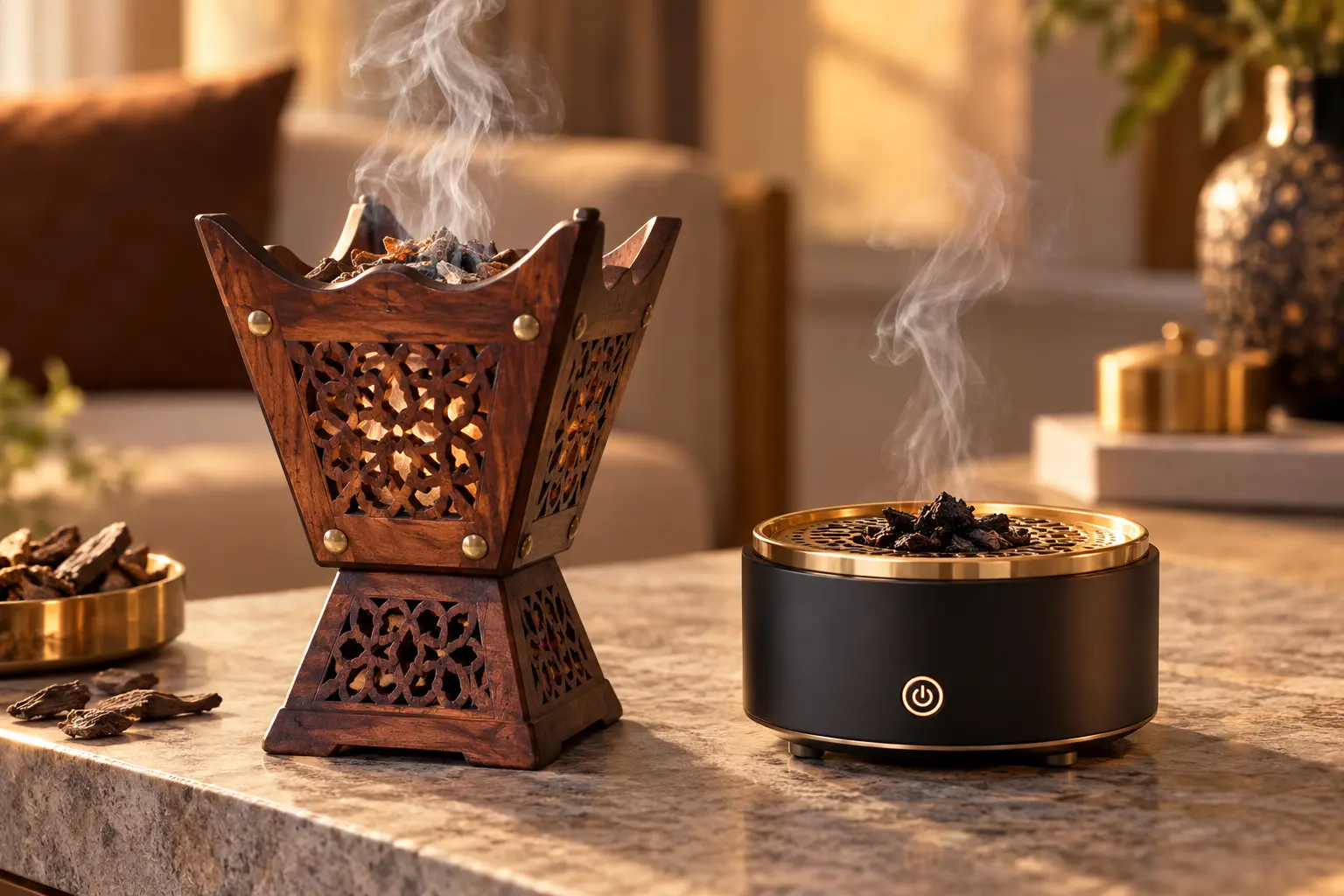
Picture a carved wooden burner at the entrance of a Gulf home, a brass bowl on a puja shelf in Hyderabad, or a small black electric box humming quietly in a London flat. All three do the same job.
Each one is a bakhoor burner: a vessel that heats fragrant wood slowly enough to release perfumed smoke without setting it alight. This guide explains the main types, how each one works, what to look for when you choose, and how to keep yours safe and clean.
What is a bakhoor burner? A bakhoor burner is a heatproof vessel that warms bakhoor so it smoulders and releases scented smoke. Traditional versions, called mabkhara, hold a hot charcoal disc. Electric versions use a heated metal plate instead. Charcoal gives a richer scent, while electric burners are cleaner and easier for daily use.
What Is a Bakhoor Burner and How Does It Work?
A bakhoor burner works by holding heat under the bakhoor, not by lighting it. Bakhoor is wood soaked in oils and resins, and it releases its fragrance when it is warmed, not when it burns with a flame.
Every burner has two parts. A heat source sits at the bottom, either a glowing charcoal disc or an electric heating plate. The bakhoor rests on top, warms up, and sends smoke drifting into the room.
If you are new to bakhoor itself, start with our guide on what is bakhoor. The short version: the burner is the tool, and the bakhoor is the fuel.
What Is a Mabkhara?
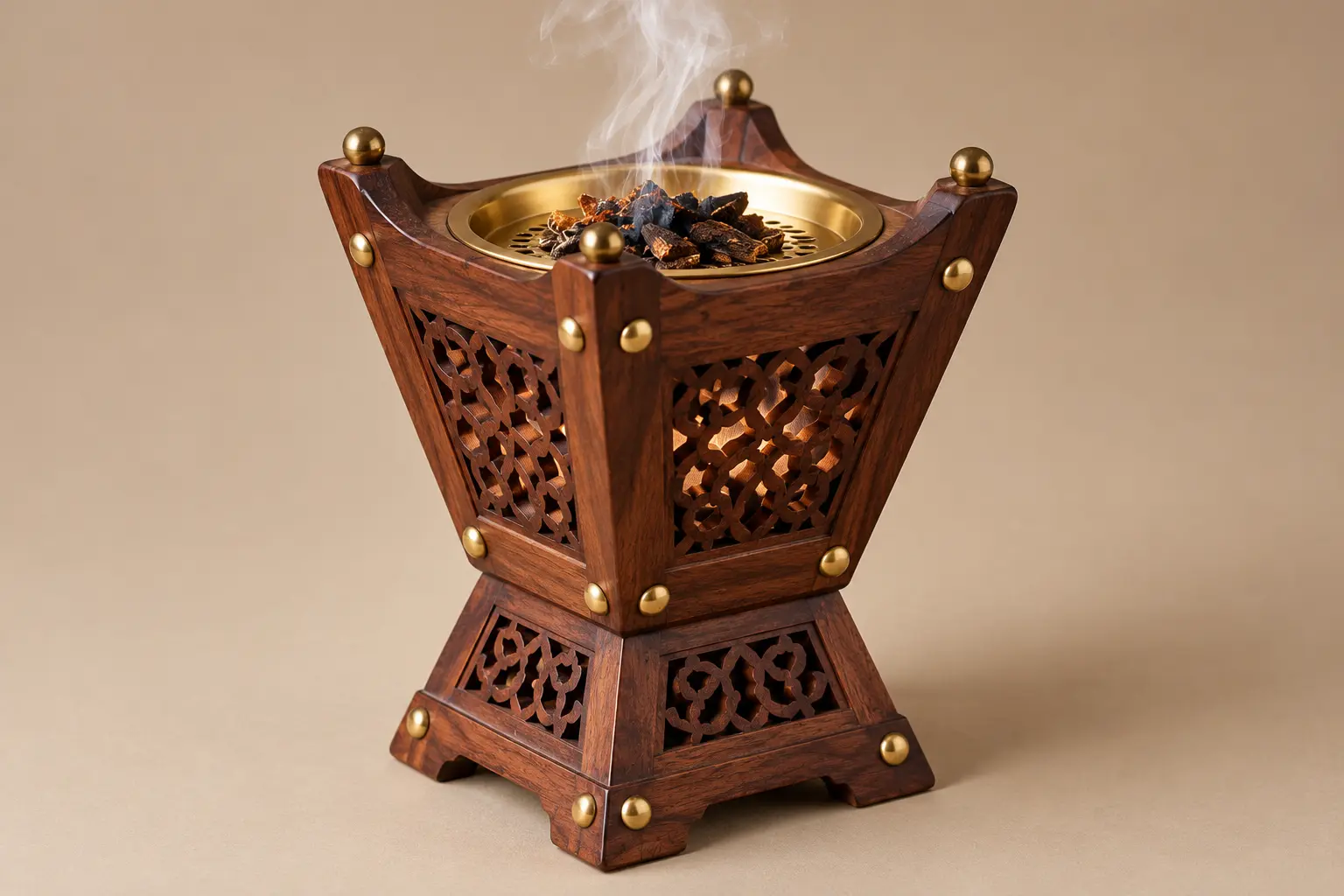
A mabkhara is the traditional Arabic bakhoor burner, and it is still the most recognisable design in the Gulf today.
Mabkhara: a traditional censer for burning bakhoor, usually a footed bowl that holds hot charcoal. The plural is mabakhir, and the same vessel is also called a mujmarah in Arabic.
Older mabakhir are often boxy, with a square wooden base, angled sides and a metal lined cup on top. Modern ones come in every shape, from tall brass towers to rounded ceramic bowls. In Somalia a similar burner is known as a dabqaad.
The design is so familiar that it appears in public architecture. Giant mabkhara shaped monuments stand in parts of the UAE and Oman, a sign of how central the burner is to hospitality there.
Tip: Mabkhara and bakhoor share the same Arabic root, linked to the idea of perfumed smoke. If someone in a souk offers you a mabkhara, they mean the burner, not the incense.
What Are the Main Types of Bakhoor Burner?
There are three main types of bakhoor burner: charcoal burners, electric burners and tea light burners. Each one heats the bakhoor differently, and that changes the smell, the smoke and the effort involved.
| Type | Heat source | Scent | Smoke | Effort | Best for |
|---|---|---|---|---|---|
| Charcoal mabkhara | Charcoal disc | Richest and fullest | Most | Highest | Guests, festivals, scenting clothes |
| Electric burner | Heated metal plate | Softer, steadier | Less | Lowest | Flats, offices, daily use |
| Tea light burner | Small candle under a dish | Gentle | Least | Low | Small rooms, light scent |
There is no single best option. The right one depends on how often you burn bakhoor, how big your room is, and how much smoke your home can handle.
How Does a Charcoal Bakhoor Burner Work?
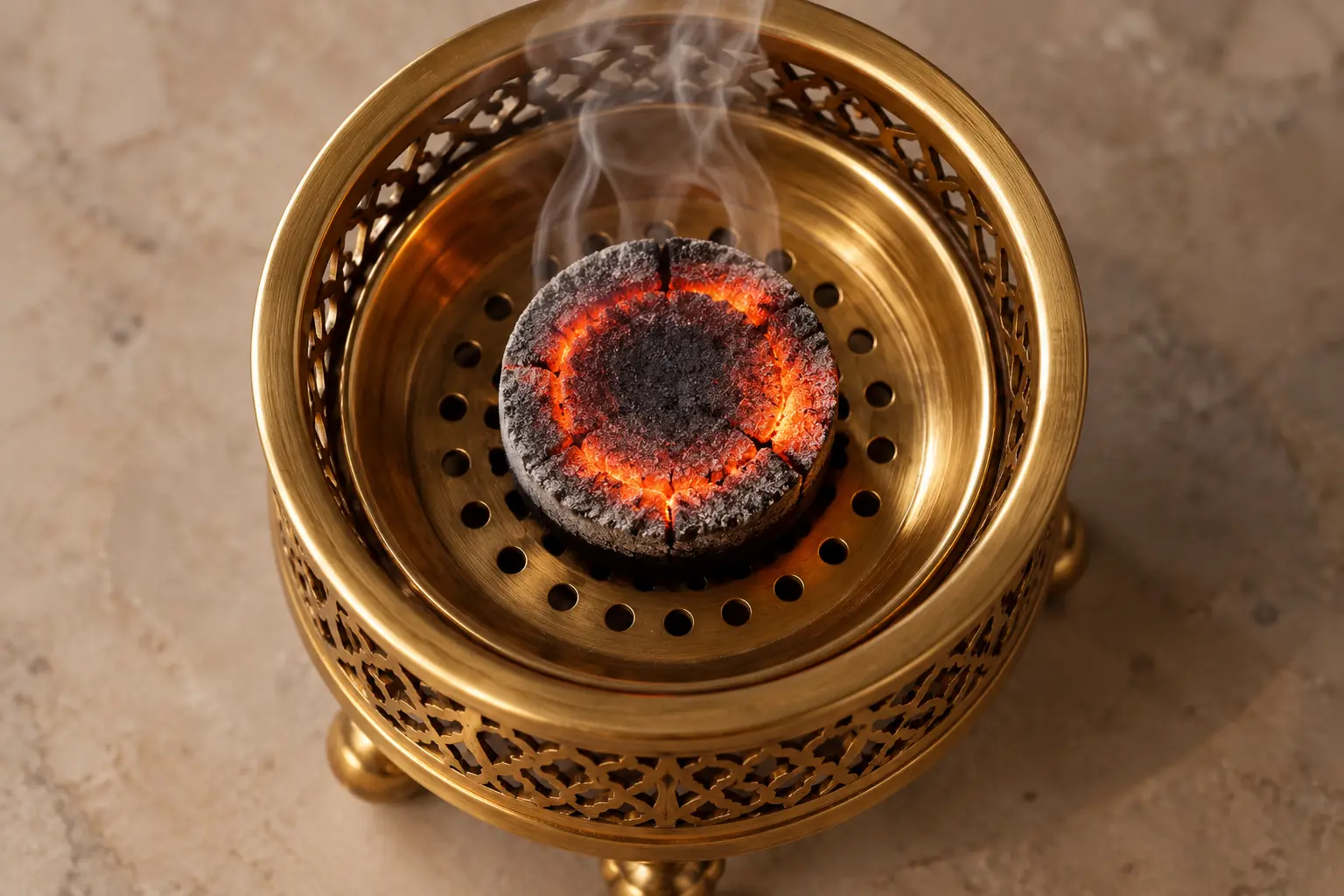
A charcoal bakhoor burner uses a lit charcoal disc as its heat source, and it is the method most people in the Gulf grew up with.
You light a small charcoal disc, set it inside the burner’s bowl, and place a piece of bakhoor on top once the disc is glowing evenly. The high, direct heat releases the full depth of the blend, which is why many people say oud smells best this way.
Most charcoal burners share a few features:
- A heatproof bowl, often lined with metal, to hold the hot disc.
- A raised base or legs, so heat doesn’t scorch the table underneath.
- Holes or a lid, which let air in so the charcoal keeps glowing.
- Handles, so you can carry the burner from room to room.
The trade off is effort and smoke. Charcoal takes time to light, the burner gets very hot, and you need to dispose of the ash safely afterwards.
How Does an Electric Bakhoor Burner Work?
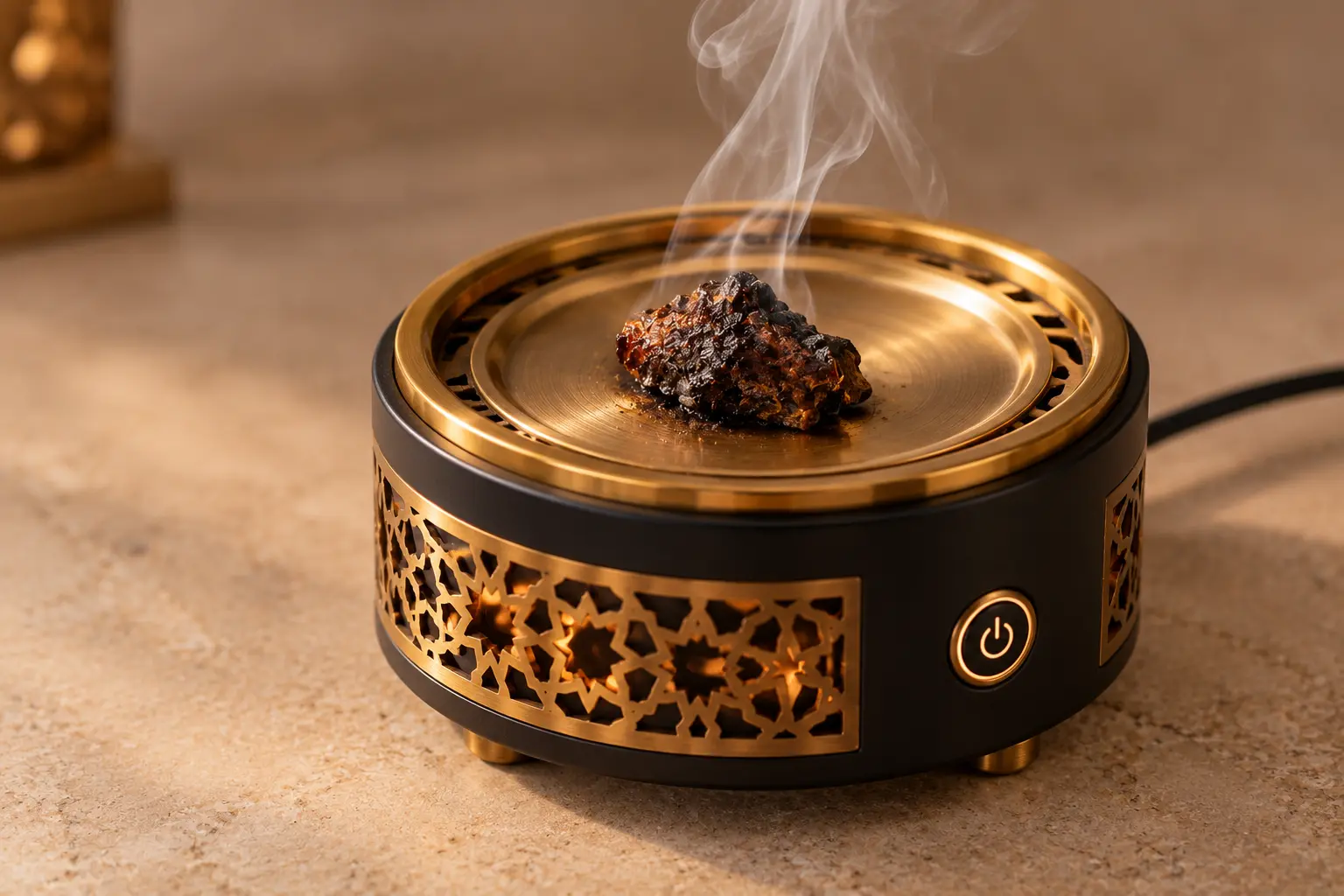
An electric bakhoor burner heats a small metal plate, and the bakhoor sits on that plate instead of on charcoal.
You switch it on, wait for the plate to warm up, and add your bakhoor. Many models have a dial or buttons that let you raise or lower the heat, and some switch off automatically after a set time.
Electric bakhoor burner: a plug in or rechargeable device with a heated plate that warms bakhoor without charcoal or an open flame.
Because the heat is lower and more even, the scent comes out more gradually and with less smoke. That makes an electric bakhoor burner popular in apartments, AC rooms and offices, and with anyone who wants bakhoor every day without the ritual of lighting charcoal.
The plate does need regular cleaning, since oils from the bakhoor build up and can turn sticky.
What Is a Tea Light Bakhoor Burner?
A tea light burner uses a small candle to warm a dish above it, much like an oil diffuser.
The bakhoor sits on a metal or ceramic dish over the flame. The heat is gentle, so the scent is soft and the smoke is light. It suits a small bedroom or a quick, subtle scent rather than filling a whole house.
Keep in mind that a tea light is still an open flame, so it needs the same care as any candle.
Which Bakhoor Burner Should You Choose?
Choose your burner by how you plan to use it. A quick way to decide:
- You burn bakhoor for guests or festivals. A charcoal mabkhara gives the strongest, most traditional scent, perfect for Eid, Diwali or a wedding welcome.
- You want daily scent in a flat. An electric burner is cleaner, quieter and easier to control.
- You mainly scent clothes. A charcoal burner with handles lets you lift it and move fabric over the smoke.
- You want something light and decorative. A tea light burner works well on a bedside table or bathroom shelf.
Plenty of households end up owning two: an electric burner for weekdays and a charcoal mabkhara for special occasions.
What Should You Look for When Buying a Bakhoor Burner?
Look first at safety and heat control, then at looks. A beautiful burner that scorches your table is not a good buy.
For a charcoal mabkhara, check:
- Material. Brass, ceramic, stone and metal lined wood all cope with high heat. Thin plastic or unlined wood does not.
- A stable base. It should not tip when you add or lift the charcoal.
- Airflow. Holes or gaps keep the charcoal glowing.
- Cool handles, if you plan to carry it.
For an electric bakhoor burner, check:
- Adjustable heat, so you can lower it for delicate blends.
- An automatic shut off timer.
- A removable or easy to wipe plate.
- Clear safety markings for your country’s electrical standards.
Size matters too. A small burner is enough for one room, while a large hall may need a bigger bowl or a burner you can move around.
How Do Bakhoor Burners Differ Around the World?
The burner changes shape from one region to the next, even though the idea stays the same.
In the Gulf, the classic mabkhara is often carved wood with brass or metal fittings, though modern versions in polished metal and ceramic are just as common.
In Somalia, the equivalent burner is called a dabqaad, and traditional versions are usually made of clay.
In India, bakhoor often shares space with older traditions. Brass dhoop burners and sambrani holders from the puja room are sometimes used for bakhoor too, since they are already designed to hold hot coals safely.
In Europe, North America and Australia, electric burners have become the usual choice. Smoke alarms, smaller apartments and rented homes all make charcoal less practical, so a compact plug in burner is often the easiest way to enjoy bakhoor at all.
Dabqaad: the Somali name for a traditional clay incense burner, similar in purpose to the Arabic mabkhara.
Tip: If you live somewhere with sensitive smoke alarms, keep charcoal burners well away from them and use an electric burner on low instead.
Is It Safe to Use a Bakhoor Burner Indoors?
A burner is safe indoors when the room is ventilated and the burner is never left alone. Charcoal needs extra care.
Burning charcoal in a closed space can lead to carbon monoxide build up. In a 2018 public warning, Qatar’s Hamad Medical Corporation cautioned against burning charcoal in enclosed spaces, noting that carbon monoxide cannot be seen or smelt and that early symptoms include headache, dizziness and nausea.
Bakhoor smoke itself also affects indoor air. A 2013 UNC study of incense common in UAE homes, where the researchers noted charcoal briquettes are often used to burn it, found the smoke triggered an inflammatory response in human lung cells in the laboratory.
These habits keep things safe:
- Open a window or a door while it burns.
- Place the burner on a heatproof surface, away from curtains and cushions.
- Never leave it unattended, especially with children or pets nearby.
- Let charcoal cool completely before you throw it away.
If anyone in your home has asthma or a breathing condition, an electric burner on a low setting is the gentler choice.
How Do You Clean a Bakhoor Burner?
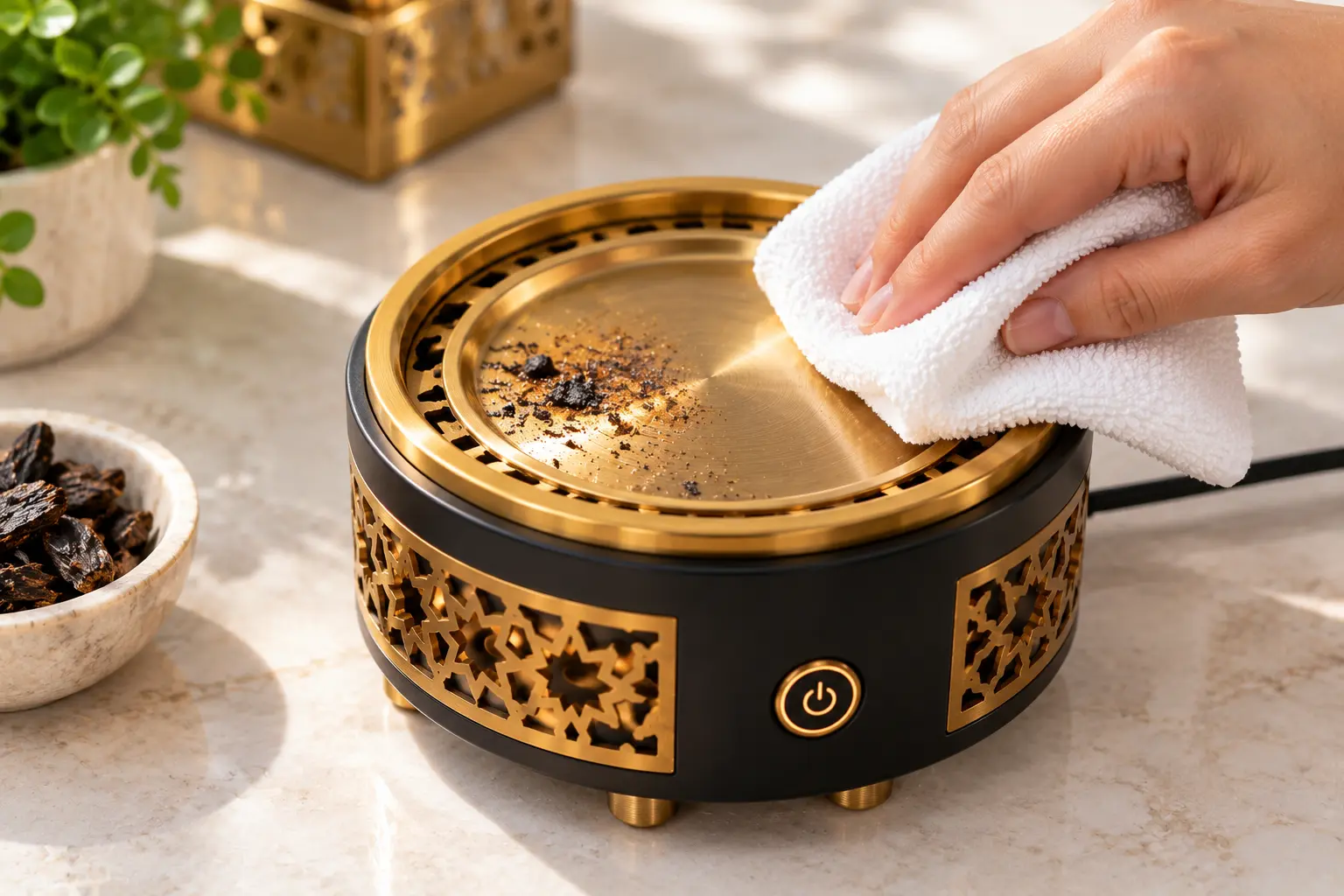
Clean your burner once it has cooled completely, and do it often enough that the oil doesn’t harden.
For a charcoal burner, tip out the cold ash and any leftover charcoal. Wipe the bowl with a dry cloth, then a damp one if needed. Brass can be polished with a little lemon and salt, a trick many Indian homes already use for puja vessels.
For an electric burner, unplug it and let the plate cool. Wipe it with a soft cloth dampened with a little rubbing alcohol to lift the sticky residue. Never put an electric burner in water.
Tip: A thin sheet of foil on an electric plate catches oil and makes cleaning quicker, but check your model’s instructions first, since some plates should not be covered.
For step by step burning methods, including smokeless options, see our guide on how to use bakhoor.
Frequently Asked Questions
What is the best bakhoor burner for beginners?
An electric bakhoor burner is usually the easiest place to start. There is no charcoal to light, the heat is easy to control, and it produces less smoke. Once you are comfortable, you can try a charcoal mabkhara for a fuller scent.
Is a mabkhara the same as a bakhoor burner?
Yes. Mabkhara is the Arabic word for a traditional bakhoor burner, usually a footed bowl that holds hot charcoal. In English, people often use bakhoor burner for any device that heats bakhoor, including electric models.
Charcoal or electric bakhoor burner: which smells better?
Many people find charcoal gives a richer, deeper scent because the heat is higher. An electric burner releases the fragrance more slowly and softly, with less smoke. The better choice depends on whether you want strength or convenience.
Can I use an electric bakhoor burner every day?
Yes, many households do. Keep a window open, use small pieces, and clean the plate regularly so oil doesn’t build up. If anyone at home has breathing problems, keep the heat low and sessions short.
What material is best for a bakhoor burner?
For charcoal burners, brass, ceramic, stone or wood lined with metal all handle high heat well. Avoid thin plastic or bare wood, which can scorch or crack. Electric burners are usually metal with a heatproof plate.
How do I stop my bakhoor burner from damaging the table?
Choose a burner with a raised base or legs, and place it on a heatproof mat, tile or stone coaster. Charcoal burners can get hot enough to mark wood and glass, so never set one directly on a polished surface.
Do I need special charcoal for a bakhoor burner?
Most people use small round charcoal discs sold for incense. They light quickly and fit standard burner bowls. Barbecue charcoal is not suitable, as it is larger, smokier and hard to control indoors.
Can I use a bakhoor burner for other incense?
Yes. A charcoal burner can warm resins like frankincense, myrrh or loban, and plain oud chips. An electric burner can usually handle the same, though very sticky resins may need extra cleaning.
Ready to Choose Your Bakhoor Burner?
The right bakhoor burner is simply the one that fits your home and habits. A charcoal mabkhara brings depth and tradition, an electric burner brings ease, and a tea light burner brings a soft, quiet scent.
Whichever you pick, use it in a ventilated room, keep it on a heatproof surface and never leave it unattended. Then explore our oud bakhoor guide to choose something worth burning in it.
Leave a Reply