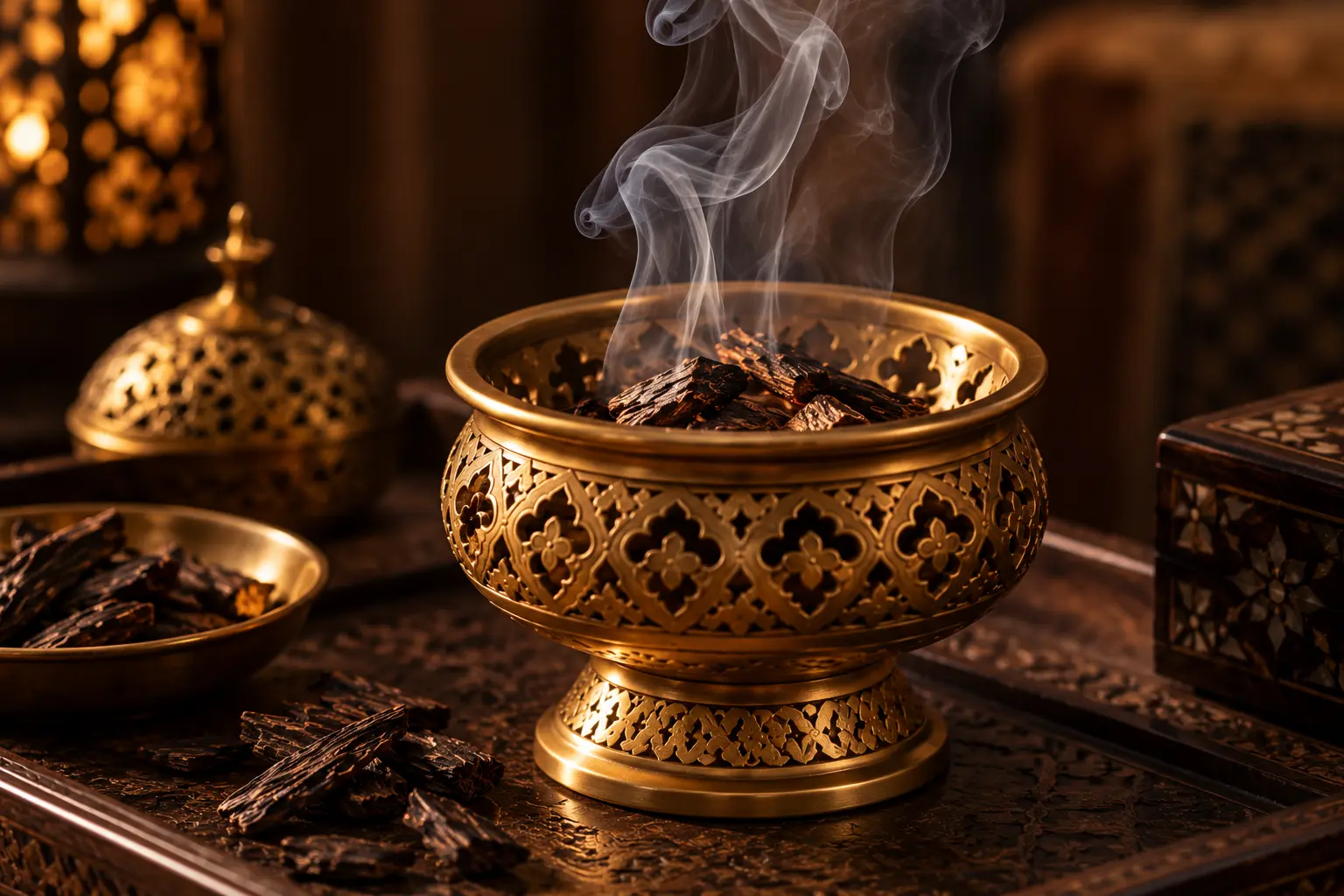
Two pieces of dark wood can look almost identical in your palm. One costs a few hundred rupees, the other more than a gold coin. Once they start to smoulder, the difference becomes obvious.
That gap is the story of oud bakhoor. It is bakhoor built around agarwood, one of the rarest fragrant materials in the world. This guide explains where oud comes from, what it smells like, why it is so expensive, and how to tell genuine oud from a synthetic blend.
What is oud bakhoor? Oud bakhoor is bakhoor made with agarwood (oud), the dark, resin filled heartwood of the Aquilaria tree. It can be plain oud chips or chips blended with oils and resins. Real oud smells smoky, woody and slightly sweet, and its scent shifts as it heats. Many affordable blends use synthetic oud oil instead.
What Is Oud Bakhoor?
Oud bakhoor is any bakhoor whose main fragrance comes from oud. Oud is the Arabic name for agarwood, and it is the backbone of most traditional bakhoor.
Oud: the Arabic name for agarwood and the fragrance made from it. The word covers the raw wood chips, the oil distilled from them and the scent itself.
Agarwood: the dark, resin filled heartwood of Aquilaria trees, formed when the tree is injured and infected. It is what gives oud its fragrance.
You will see oud bakhoor in two main forms. Plain oud chips are pure agarwood with nothing added. Blended oud bakhoor mixes oud, or oud oil, with other ingredients such as rose, musk, amber and honey. Both burn the same way; they simply smell different.
New to bakhoor itself? Our guide on what is bakhoor covers the basics.
Where Does Oud Come From?
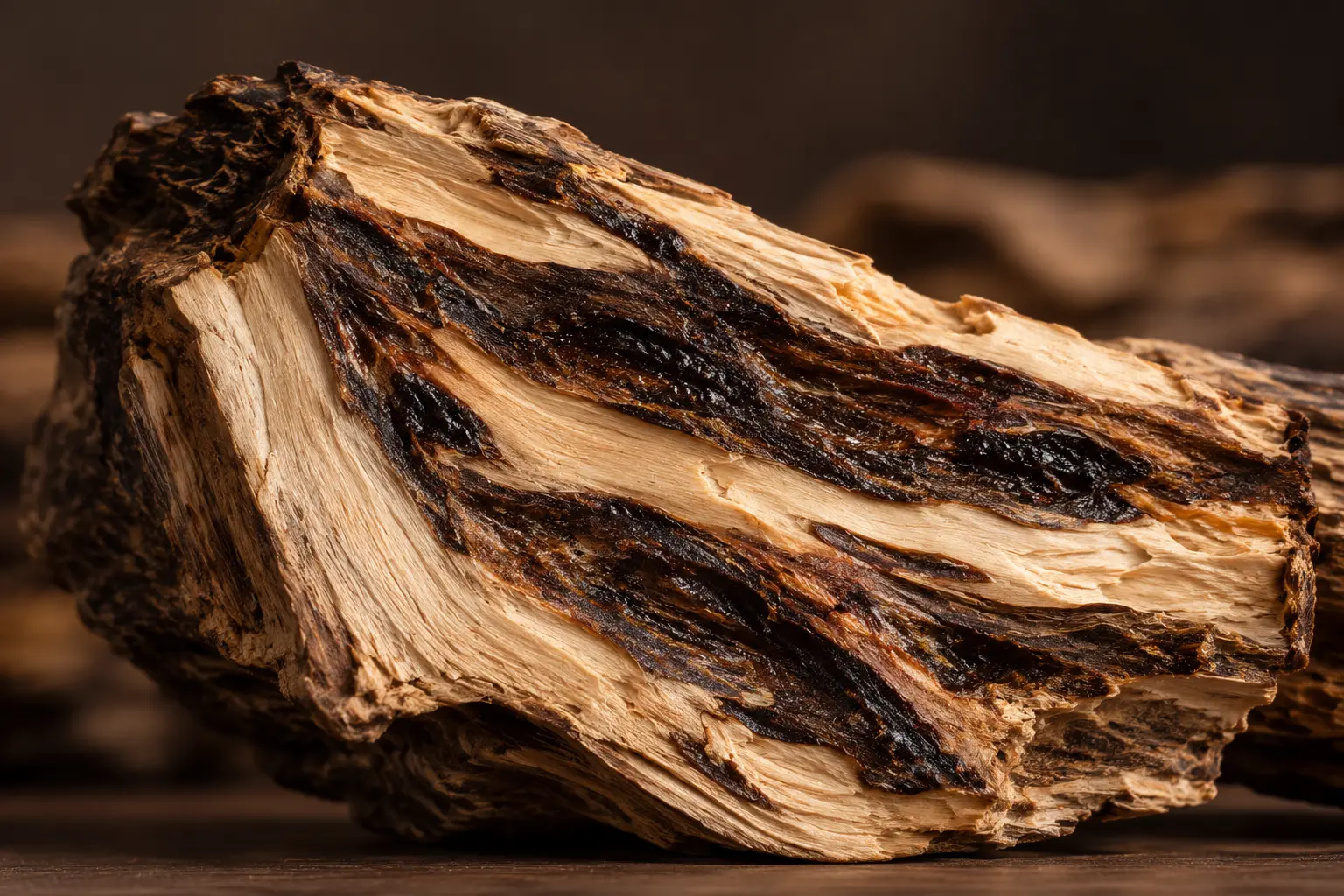
Oud comes from Aquilaria trees, which grow across India, Southeast Asia and parts of southern China. A related genus, Gyrinops, produces agarwood in parts of Indonesia and Papua New Guinea.
Here is the surprising part. A healthy Aquilaria tree has almost no smell. According to a 2022 review in the journal Molecules (NCBI review), the fragrant resin forms only when the tree is wounded and infected by fungi, as a defence response. The same review estimates that only around 10% of wild Aquilaria trees ever produce it.
That is why oud is often described as the scent of a wounded tree. Lightning, insects or a broken branch can start the process, and good quality resin can take years to build up.
India has a long connection to oud. Assam is one of the best known sources of Aquilaria in the country, and Indian researchers were already experimenting with ways to trigger resin in these trees in the mid twentieth century.
Why Is Oud Bakhoor So Expensive?
Oud bakhoor is expensive because real agarwood is rare, slow to form and tightly regulated.
Rarity is only part of it. Heavy harvesting of wild trees led CITES, the international treaty on trade in threatened species, to list one agarwood species in 1994 and then every species of Aquilaria and Gyrinops in 2004, as summarised in a CITES report prepared for its 2022 conference. Legal international trade now needs permits.
The very best grades command extraordinary prices. A 2018 study in Molecules (2018 study) noted that Kynam, the most prized variety, was reported to cost about 350 euros per gram.
Kynam: also spelt kinam or kyara, the rarest and most valued type of agarwood, known for its very high resin content and dark colour.
To meet demand, much of today’s agarwood comes from plantation trees that are deliberately wounded or inoculated with fungi to form resin. Plantation oud is more affordable, but its quality varies widely.
What Does Oud Bakhoor Smell Like?
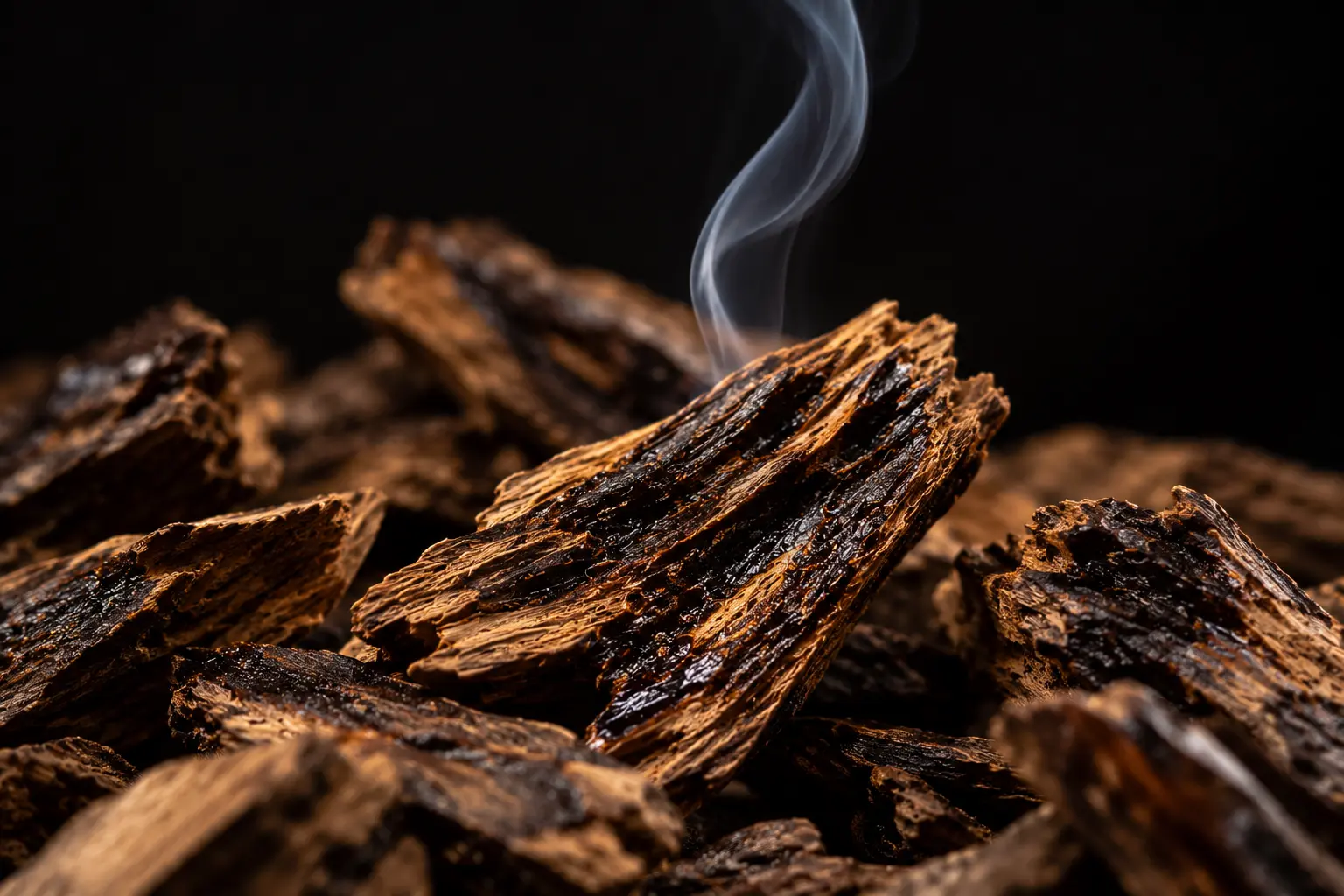
Real oud bakhoor smells smoky, woody and gently sweet, with a depth that is hard to compare to anything else.
Its scent also changes as it heats, which is one of the clearest signs of real agarwood:
- At first: sharper and smokier, sometimes with a slightly medicinal or leathery edge.
- As it warms: woodier and rounder, often with hints of honey, spice or dried fruit.
- Afterwards: a soft, balsamic warmth that lingers in fabric and curtains.
Oud from different regions is often described differently. Indian and Assamese oud is usually called deep and earthy, while oud from parts of Southeast Asia is often described as sweeter and lighter. These are broad patterns, not rules, and quality matters more than origin.
Blended oud bakhoor smells richer and sweeter from the start, because rose, musk or amber sit on top of the wood.
What Is the Difference Between Real vs Fake Oud?
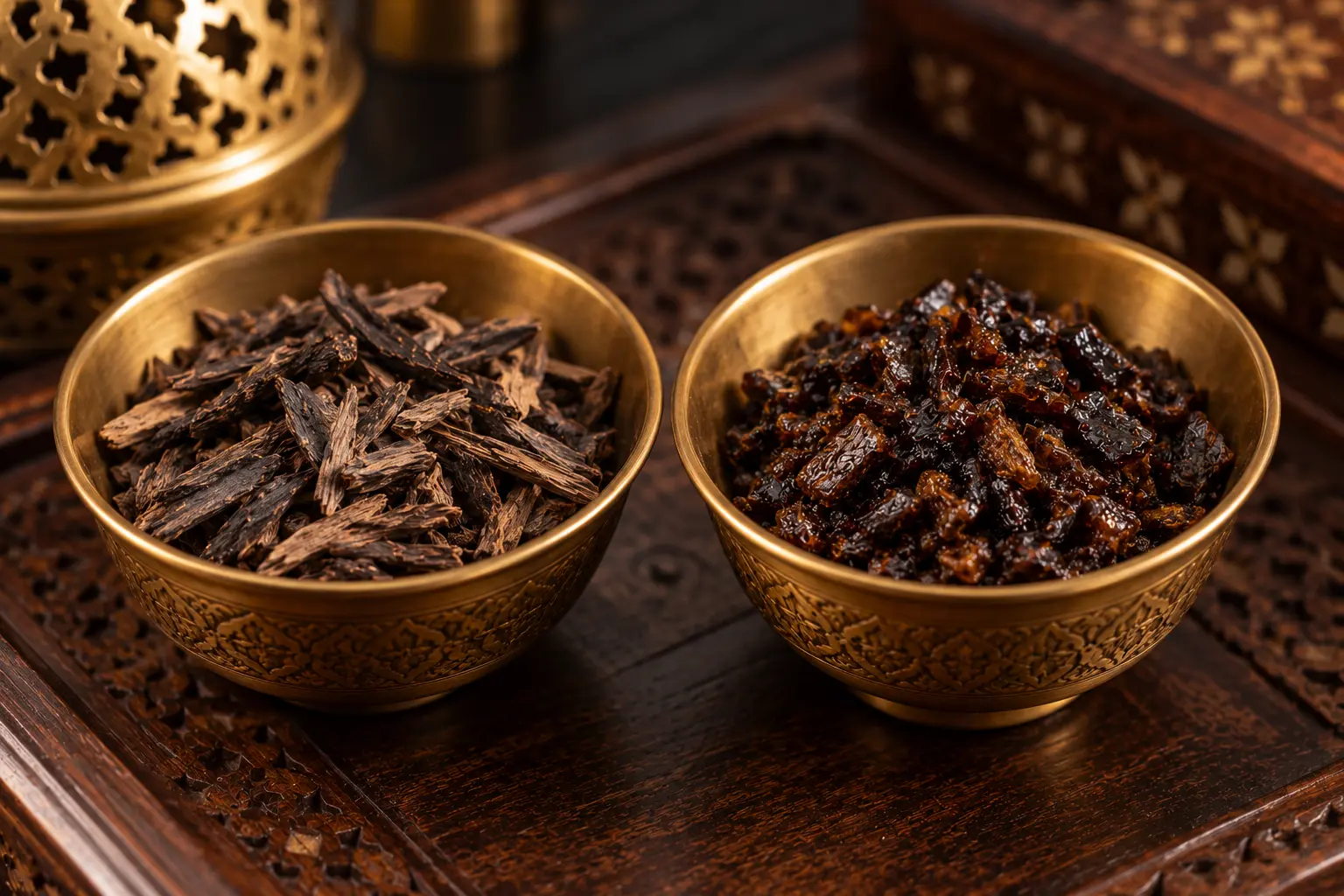
The main difference in real vs fake oud is where the scent comes from. Real oud gets its fragrance from resin inside the wood, while fake or synthetic oud usually relies on aroma chemicals or cheaper wood soaked in oud scented oil.
Synthetic oud: a lab made fragrance designed to imitate the smell of agarwood. It is common in affordable bakhoor and perfumes, and it is not harmful in itself, but it is not real agarwood.
Adulteration is a known problem in the oud trade. A 2022 study in Frontiers in Chemistry (Frontiers study) noted that because agarwood is scarce and expensive, adulteration of agarwood oil is a persistent issue, and researchers are developing lab methods to detect it.
| Real oud | Synthetic or blended oud | |
|---|---|---|
| Scent source | Resin inside the wood | Aroma chemicals or added oils |
| How it smells | Layered, shifts as it heats | Often the same from start to finish |
| Feel | Dense, may feel slightly oily from natural resin | Often glossy or sticky from added oil |
| Price | High, especially for top grades | Affordable |
| Labelling | Often sold by grade and origin | Often labelled simply as oud |
Neither is wrong to enjoy. The problem is only when a synthetic blend is sold as pure oud at a real oud price.
How Can You Tell If Oud Bakhoor Is Real?
There is no single home test that proves oud is real, but several signs together give you a good idea.
- Price. Genuine oud is rarely cheap. A very low price for “pure oud” usually means a blend.
- Scent that evolves. Real oud changes as it smoulders. A scent that stays flat and identical throughout is more likely synthetic.
- A harsh, sharp chemical note. Some synthetic oud smells piercing rather than warm.
- Very glossy, wet looking chips. These are often soaked in oil, which is normal for blended bakhoor but not for plain oud chips.
- Clear information. Sellers of genuine oud often name the grade, origin and whether it is wild or plantation.
What about the famous water test? Some people claim real oud always sinks. The truth is more complicated. In the 2018 Molecules study, Kynam fully sank, a Vietnamese sample only partly sank, and samples from Laos and Cambodia floated. Sinking hints at dense, resin rich wood, but plenty of genuine agarwood floats.
Tip: The same 2018 study noted that agarwood grading tends to be subjective. If you are buying expensive oud, buy from a seller who can explain the grade and origin, and start with a small amount.
How Do You Use Oud Bakhoor?
Use oud bakhoor the same way as any bakhoor, on charcoal or an electric burner, but with a lighter hand.
Plain oud chips are concentrated, so a very small sliver is often enough. Many people prefer charcoal for oud because the higher heat brings out its depth, while an electric burner on a low setting releases it more slowly and gently.
For full step by step methods, see our guide on how to use bakhoor, and to pick the right equipment, our bakhoor burner guide.
When Is Oud Bakhoor Used?
Oud bakhoor is used most for special moments, though many Gulf homes burn it daily.
- Welcoming guests. In many Gulf homes, burning oud is a sign of hospitality.
- Eid and Friday prayers. Clothes and homes are scented before visits and the mosque.
- Weddings. Oud often fills entrance halls and is part of the bride’s preparations.
- Diwali and housewarmings. In India, oud bakhoor increasingly sits alongside agarbatti and dhoop.
Its strength makes it better suited to evenings, larger rooms and cooler weather than to a small bedroom on a hot afternoon.
Is Oud Bakhoor Sustainable?
Oud bakhoor can be sustainable, but it depends on where the agarwood comes from. Wild agarwood has been heavily overharvested, which is exactly why every species of Aquilaria is now listed under CITES.
Plantation agarwood has changed the picture. Trees are grown on farms and deliberately wounded or inoculated with fungi so that they form resin, rather than being cut from forests. Countries across Southeast Asia and parts of India now grow agarwood this way, and the 2022 Molecules review describes artificial induction as a response to the depletion of natural agarwood.
Plantation oud isn’t automatically lower quality, but it is usually younger and less complex than old wild agarwood bakhoor. For most people burning bakhoor at home, it is a perfectly good and more responsible choice.
A few questions worth asking a seller:
- Is it wild or plantation grown?
- Where was it grown?
- Is it pure oud or a blend?
- Is the trade documented? International shipments of agarwood need CITES permits.
Synthetic oud, for all its limits, also takes pressure off wild trees. If you love the smell but not the price or the sourcing worries, a well made synthetic blend is a fair option.
How Should You Store Oud Bakhoor?
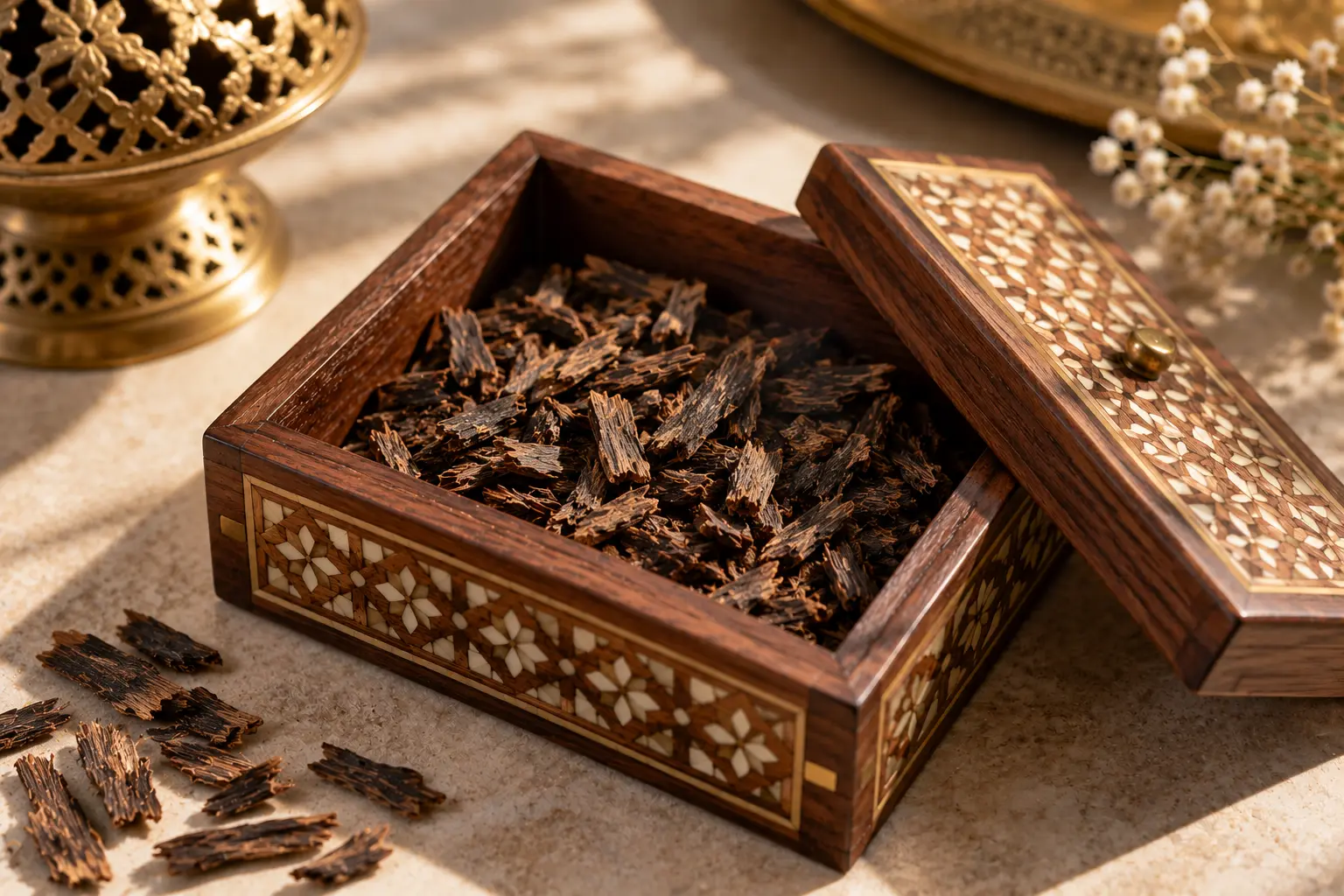
Store oud bakhoor in an airtight container, away from heat and direct sunlight.
Wooden or glass boxes with tight lids work well. Keep it away from strong smells, since wood absorbs odours. Real oud chips age well, and some people believe the scent becomes smoother over time. Blended bakhoor can dry out, so keep the lid closed and use it within a reasonable time.
Frequently Asked Questions
What is oud bakhoor made of?
Oud bakhoor is made from agarwood, the resin filled heartwood of the Aquilaria tree. It can be plain oud chips, or oud blended with oils such as rose and musk, resins and a binder such as honey. Many affordable versions use synthetic oud oil.
Is oud the same as bakhoor?
No. Oud is agarwood, a fragrant wood, while bakhoor is a preparation burned for scent. Oud bakhoor is bakhoor made with oud. Not all bakhoor contains real oud.
How can I tell real vs fake oud?
Look at several signs together: price, whether the scent changes as it heats, a harsh chemical edge, and how much information the seller gives. No single home test, including the water test, is fully reliable.
Does real oud sink in water?
Some does, but not all. In a 2018 study, the rarest agarwood fully sank, while other genuine samples floated. Sinking suggests dense, resin rich wood, but floating does not mean it is fake.
Why is agarwood bakhoor so expensive?
Agarwood forms only when an Aquilaria tree is wounded and infected, and research suggests only around 10% of wild trees produce it. Its trade is regulated under CITES, and top grades can sell for hundreds of euros per gram.
What does oud bakhoor smell like?
Real oud smells smoky, woody and slightly sweet, sometimes with leathery or honey notes. Its scent shifts as it heats. Blended oud bakhoor smells sweeter from the start because of added oils like rose and musk.
Is synthetic oud bad?
Not necessarily. Synthetic oud is common in affordable bakhoor and perfumes and many people enjoy it. It simply isn’t real agarwood, so it shouldn’t be priced or sold as pure oud.
Is Indian oud good?
Assam is one of the best known sources of agarwood, and Indian oud is often described as deep and earthy. Like oud from anywhere, quality depends on the grade and the resin content rather than origin alone.
Is Oud Bakhoor Worth It?
Oud bakhoor is worth it if you enjoy a deep, smoky scent and know what you are paying for. Real agarwood is rare and costly; synthetic blends are affordable and pleasant. Both have a place.
The key is honesty about which is which. Smell before you buy, start small, and burn oud bakhoor in a ventilated room so you can enjoy every layer of it.
Leave a Reply